Get Design Advice: Room by Room

Focal Point
Every well-decorated room has a focal point, a place to which the eye is drawn. It may be built into the room, such as a fireplace or a window with a great view, or it may be created with a large painting, mirror or even an entertainment wall.
Floor Plans
After deciding on a focal point, plan to place furnishings in an arrangement that will embrace it. Keeping balance in mind, establish a traffic pattern that allows comfortable access to the room and seating. Major traffic paths should be at least 36" wide and flow around the furniture setting.
In a living room, be sure to allow enough room to access windows, entertainment setups and bookcases. Avoid routing paths through the middle of conversation areas or between the TV and its viewers. In the dining room, it is ideal to have approximately 36" between the backs of chairs and the perimeter wall or other furnishings, such as china cabinets and servers. The object is to allow ample room for serving and for moving a chair in and out.
TIP: Use graph paper to sketch your room before you shop. Be sure to note permanent features such as windows, doors and electrical outlets.
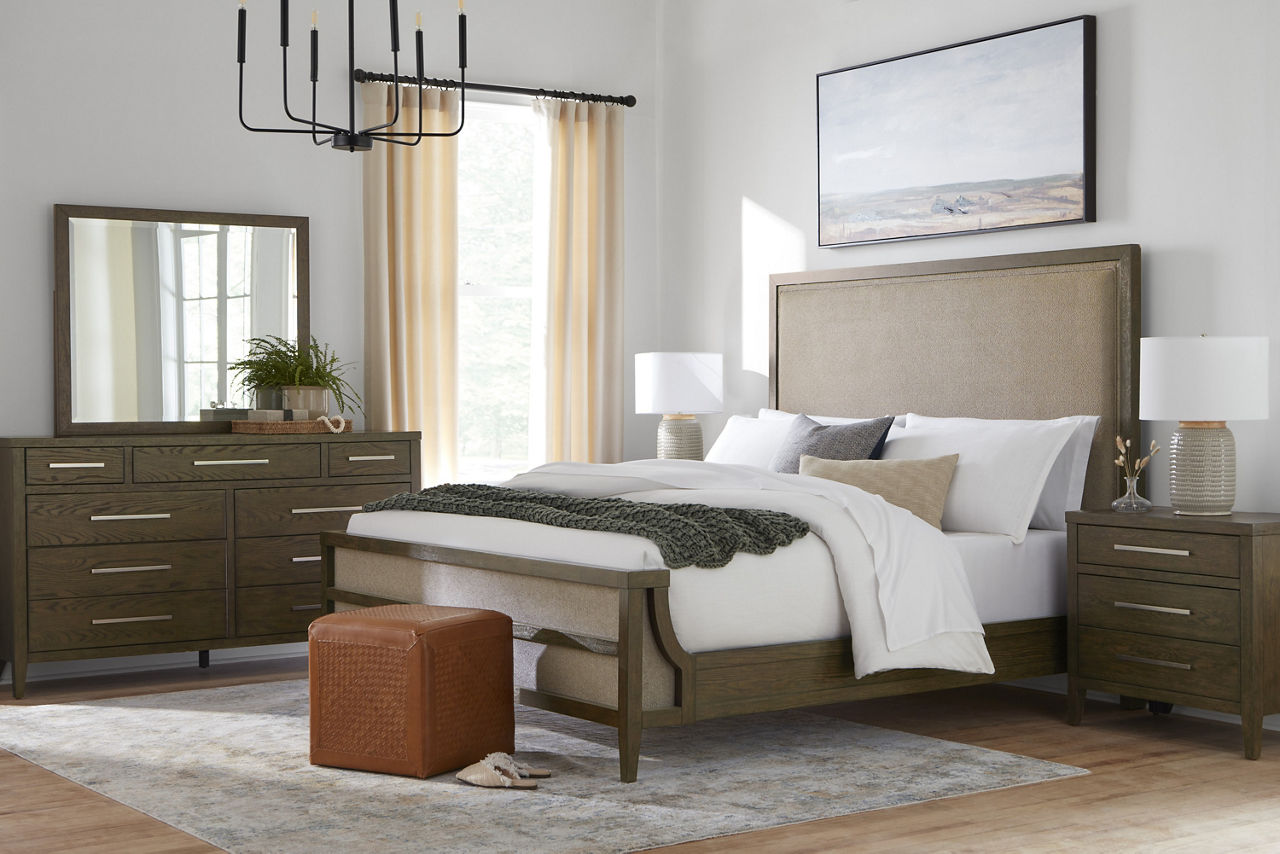
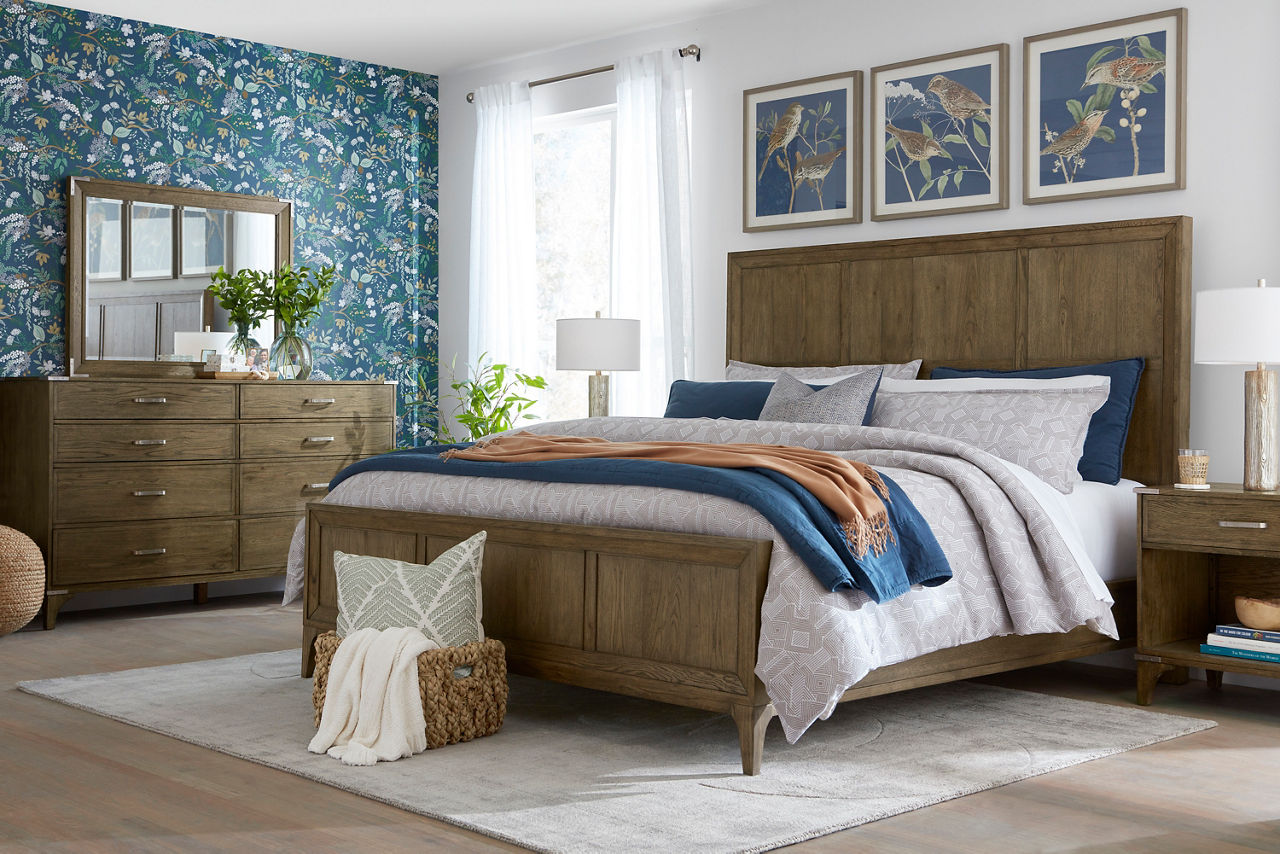
In bedrooms, allow at least 24" on either side of the bed so that it can be easily made. While traditional bed placement is most convenient, if you have a relatively simple décor and want to showcase the bed, consider a diagonal placement. Keep in mind, however, that placing a bed diagonally will take up most of the corner area. Finally, allow 36" to 40" in front of dressers or chests to comfortably access drawers.
In a child's room or guest room where there may be more than one bed, leave about 18" to 24" between beds.
Expanding a Small Room
There are several ways to make a small area feel more spacious. First, try arranging furniture in one undivided, open setting, being careful to avoid overcrowding and clutter.
Choose furnishings that are proportionate to the space. This includes staying away from oversized upholstered pieces with large prints. Instead, explore corner-placement designs and furnishings that can serve dual purposes such as storage ottomans and sleeper chairs.
Rounded corners, tables with glass tops, and open étagères are good to look for when selecting wooden furnishings, as they will help create a feeling of spaciousness. Take advantage of the vertical space by using tall, shallow storage pieces, such as armoires or bookcases.
In terms of color, cool colors such as greens and blues recede into the background. Therefore, light, cool wall colors and floor coverings will create a more open feel, especially when coordinated with lighter woods and upholstery.
TIP: A large framed wall mirror or several mirrors grouped on a wall will visually expand a room.
Downsizing a Large Room
A large room can be made to appear more intimate with furnishings, simple architectural accents and accessories. Start by dividing a single large space into two or three smaller spaces. This is most easily accomplished by using area rugs to delineate the space. A large living room might be divided into two conversation areas, or a sitting area can be created within a large bedroom.
Create balance with oversized or large-scale furniture that is proportionate to the room's size. Upholstered seating with tall dressmaker skirts and chair and ottoman ensembles in deep or bright upholstery hues are good choices. Furniture with darker finishes (preferably with square corners), tables with solid surfaces and bases and deep storage pieces like entertainment armoires and walls also work well.
If the room has a tall ceiling, invest in a large chandelier, ceiling fan or light fixture to shorten the optical distance between the floor and the ceiling. Consider adding deep crown or picture molding, wainscoting or chair rails. Accessories such as plant stands, pedestal tables and screens add dimension too. Opt for large-scale artwork to accent walls, and avoid large mirrors.
Finally, choose wall colors in warm, deep shades to create a cozy effect.
Color Scheme
Another key element of a well-decorated room is color. It influences not only the look of a room but also the moods of those who use it. Chromadynamics, the study of physiological effects caused by observing color, proves that colors can affect vision, hearing, respiration and even circulation.
Reds, yellows and oranges make up the warm spectrum. Cool hues include blues, greens and violets. Neutrals, built around black, white, gray, beige and taupe, are versatile and work for nearly every style of décor.
Consider the natural light in a room when choosing color. A sunny room can be balanced by neutral or cool colors, while warm colors can make a north-facing room feel cozier.
Artificial light also affects color. Incandescent light gives color a warm yellow cast, fluorescent bulbs cool down colors, and halogen light is very white, causing little color distortion.
Hang a color sample (at least 1 sq. ft.) on the wall and observe it at different times during the day in both natural and artificial light. The variance can be surprising.
Lastly, before painting a room, consider the level of sheen or gloss. While flat paints are more suitable for a traditional look, higher sheens are more prevalent in contemporary décor. Bear in mind, however, that lower-sheen paints such as flat and eggshell tend to mask imperfections better, while light reflections from higher-sheen paints such as satin and gloss emphasize wall flaws. Semi-gloss and gloss paints are, however, easier to clean and often used for trim. New formulations of paint such as flat enamels combine the advantages of a low-sheen finish with the practicality of being washable and offer a good alternative to traditional formulas.
Living Rooms & Family Rooms
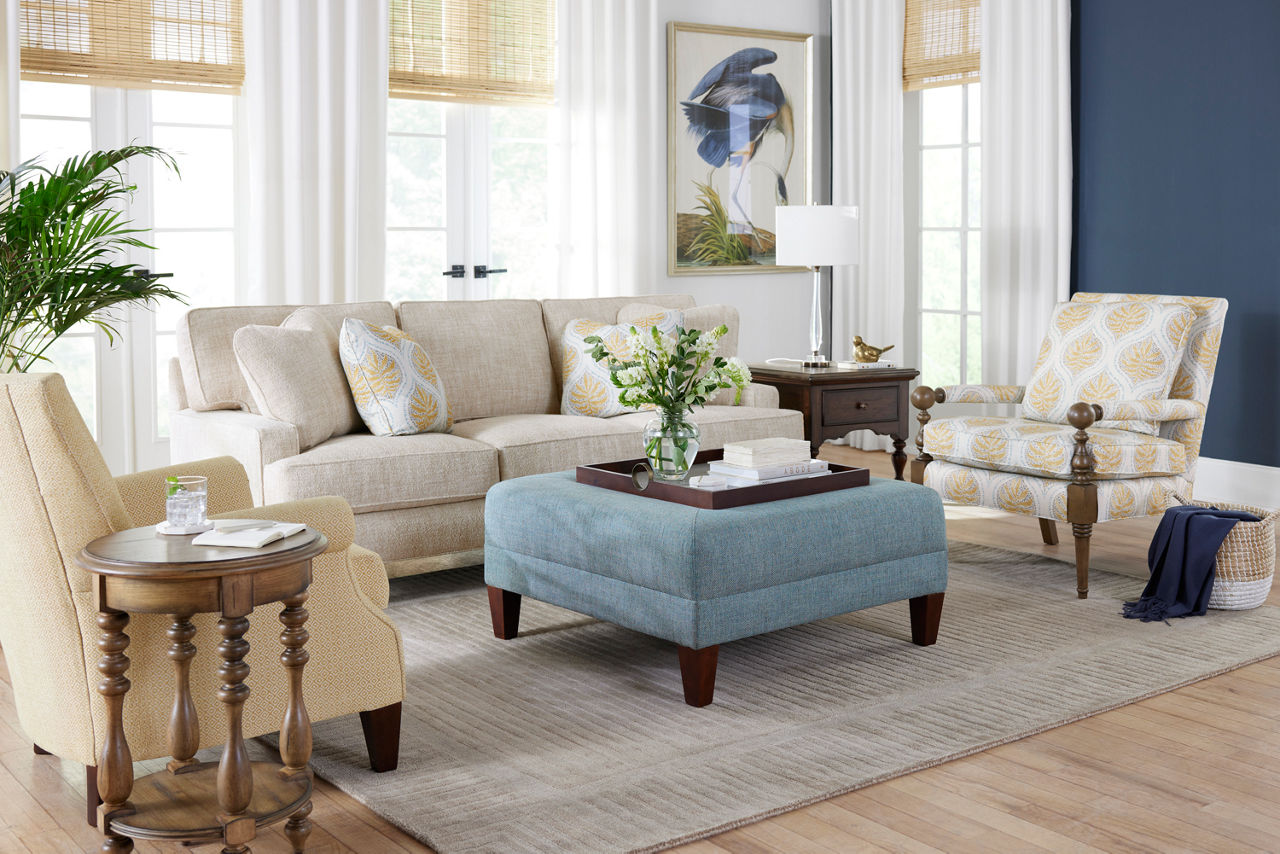
The first step in designing the busiest area of your home is to determine the room's primary function and choose a type of seating for those who will use the room regularly. In open floor plans, where the living area adjoins the kitchen and/or dining area, overlapping furniture elements, such as woods and wood finishes, can tie them together. Conversely, contrasting wall colors, varied lighting and area rugs can serve to visually divide the areas.
In a heavy-use living room, consider more durable upholstery such as heavy cottons, like twill or denim, or heavier microfibers and microsuedes. Leather is also an excellent choice. Tables and other pieces built with distressed wood, stripped pine or matte-finished woods will conceal scuffs and scratches.
TIP: Be sure to use no-skid rug pads to prevent rugs from slipping and to protect hardwood floors.
Storage is a big consideration in today's multi-purpose family rooms. Large armoires and entertainment walls are ideal for storing home electronics, books and accessories. Low chests or trunks make great tables and offer storage for magazines, books, toys and throw blankets. Cocktail and storage ottomans are other options.
Dining Areas
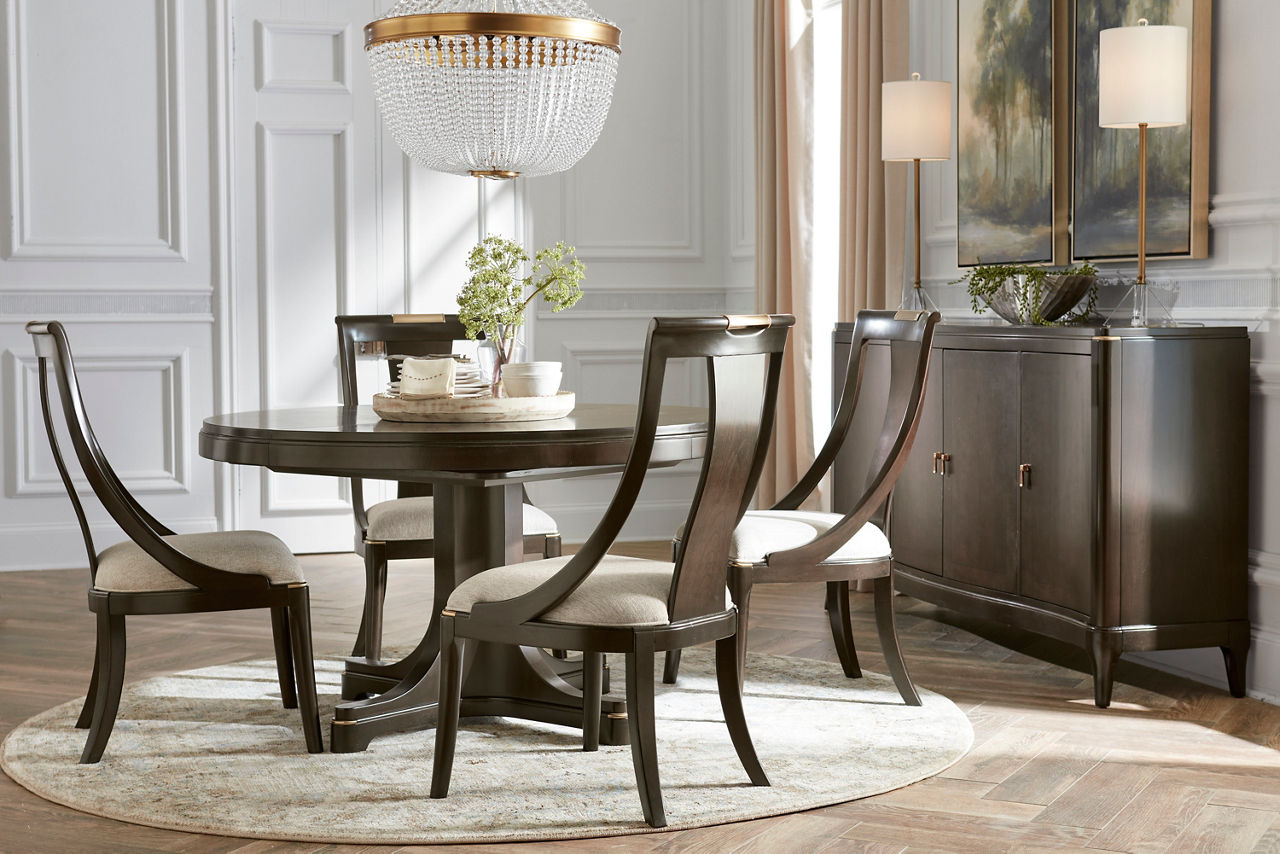
To create an inviting dining area, let the shape of the space determine how the furniture is arranged. Place storage pieces first, such as the china cabinet, sideboard or server. Is the remaining space square or rectangular? Oval or rectangular tables work best in rectangular rooms, while round or square tables are ideal for square rooms. If you happen to have a dominant focal point, such as a fireplace or large window, balance the room setting by placing the heaviest case piece on the opposite wall. In general, china cabinets and buffets are most functional next to the door nearest the kitchen. In smaller or more casual spaces, baker's racks or cupboards are practical alternatives to full-size china cabinets.
TIP: When choosing an area rug for a dining room, be sure to select a rug large enough to accommodate the chairs. Chair legs should rest on the rug so that they will not mar the floors when moved.
Next, decide on the type of table. A table with a pedestal base allows for more seating than a table with four legs, while a table with a glass surface will make a small dining area look more spacious, and will show off an interesting area rug.
Position the table so that a chandelier or light fixture hangs about 30" above its center. When it comes to arranging dining chairs, leave about 36" behind each chair for easy seating and serving.
Bedrooms
Because the bed is the largest piece of furniture, placing it first will help determine the placement of other smaller pieces.
For a bed with a headboard, the center of the longest wall is generally a good way to showcase it. However, if the room is large enough, placing the bed diagonally, particularly with a four-poster or canopy bed, makes a dramatic statement. Placing the bed diagonally or off-center might also allow for a small sitting area. This is especially ideal for a bedroom with a large bay window. Consider furnishing this space with one or two comfortable chairs or a chaise.
TIP: Create interest by placing a bed below a window. The window and window treatments such as curtains or shutters can create the effect of a headboard.
Once the bed is placed, a typical furniture configuration features a night stand on either side of the bed, convenient for lamps and storage. However, using a small chest from the bedroom collection or even a small secretary in place of night stands is a refreshing alternative to this traditional look.
Next, a dresser with mirror and/or a drawer chest are recommended for both establishing a style within the bedroom as well as providing storage space for clothing.
Storage has become essential not only for clothing, but also for accessories, books and other basics. Armoires and wardrobes have become beautiful storage alternatives. And since most bedrooms include a TV, armoires also house (and conceal) entertainment equipment.
If there is room, a bench placed at the foot of the bed offers a convenient place to sit when dressing. Similarly, a cedar chest (with or without a padded top) provides seating as well as storage for blankets, pillows, etc.
Youth Bedrooms
Youth furniture is unique in that most collections will feature a multitude of pieces, making it easy to customize a room according to your child's age and needs. Youth bedroom collections tend to feature light woods, often in solid colors or a white finish. More contemporary collections may even include materials such as enameled metal or whimsical fabric tents to place over a bed. Beds in these collections can be basic panel, sleigh or slat as well as styles such as captain's, loft and bunk.
Size-wise, most youth bedrooms offer a full-size bed option in addition to a typical twin-size bed. Unlike master bedrooms, youth bedroom collections often include a desk and chair in addition to the conventional bedroom pieces.
Home Office
In the last decade there has been a notable shift toward telecommuting and home-based businesses. More people are working from home via telephone and the Internet than before. As a result, many have transformed their guest rooms or spare rooms into home offices.
A typical home office includes a desk, often with a hutch, a printer stand with an attached file cabinet, bookcases and shelving, as well as an executive chair with wheels.
In some homes, home offices serve multiple functions: everything from an auxiliary office to a home-based business to a homework station. Adding a chaise, daybed or sleeper sofa to a home office can make the room double as a guest room. Adding tall wall-to-wall bookcases can lend it a library feel.
TIP: A small television, placed in a computer armoire or bookcase, makes a home office complete.
Home Entertainment
With increased innovations in big-screen technology and theater-like sound systems, many homes have dedicated a separate room solely to entertainment. Often this room contains a large-screen TV, DVD player, VCR, and CD player with surround-sound speakers. Some setups also include video game consoles. While certain components are built into the room, others require organization. Specifically for this reason, manufacturers have designed a new class of furniture. Whether you are looking for an entire entertainment wall, a home theater, or a compact center or armoire, there are many options to choose from.
Entertainment armoire or center: A vertically or horizontally oriented unit, usually with storage compartments and doors, often part of a matching bedroom group; or the center section of an entertainment wall, which can often be used by itself as a stand-alone entertainment center.
Entertainment wall: A three-piece ensemble including a center armoire and left and right pier units.
Home theater: Designed for a big-screen or other large TV format, a home theater generally includes a bridge with shelf, often with recessed lighting, and left and right pier units.
Pier units: Component or storage units on either side of an entertainment center unit, armoire or bridge with shelf; designed with a variety of configurations (open, door, glass door, curio) and features (accent lighting, media storage drawers, exchangeable speaker grills).
Corner units: Built to be placed in a corner for display or book storage, these angled units, sometimes fitted with doors, can be added onto the ends of entertainment walls or home theaters.
TV cart or TV console: A console unit that can be added to a home theater in order to accommodate a more standard-sized TV.
Some manufacturers have created home theater-style seating to complement entertainment sets. Inspired by the actual theater experience, these chair and sectional seating arrangements often feature storage consoles and food and drink holders like those found in movie theaters. Upholstered in leather or microsuede, home theater seating often has reclining capabilities for convenience and comfort. From theater-style seating to various entertainment setups, creating a dream home theatre has never been easier.


Get Design Advice